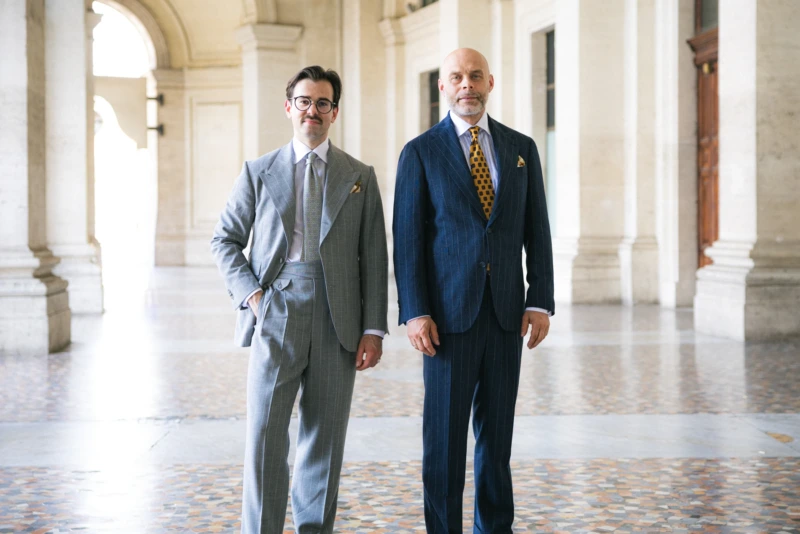
Although knowledge about tailoring fabrics is not hard to come by today, the sheer number of parameters can cause a bit of a headache. Today, we want to explain wool twist—we will detail what high-twist wool is, what the Super S number means, and examine whether high-twist wool is always high-quality wool. A navy suit for work that we tailored for a special event organized by Loro Piana served as our inspiration.

What Does the Super S Number Mean? Why Is High-Twist Wool Considered a Mark of Quality?
For many years, sales advisors in retail stores have explained the “Super S” number provided by fabric manufacturers as yarn twist. At the same time, without knowing what this number actually means, they talk about how a higher number indicates higher quality wool. This is a much more complex topic, and we are not surprised that it is difficult to explain without specialized knowledge—so we will try to clear up any doubts in the most accessible way possible.
The “Super S” number indicates the fineness of the wool fiber used to weave the fabric. This is a remnant from times when production was not standardized and many brands wanted to show that their wool was finer and softer to the touch. To achieve this softness, as many hanks of yarn as possible had to be spun from one pound of wool—if there were 100, the wool was designated as 100s.
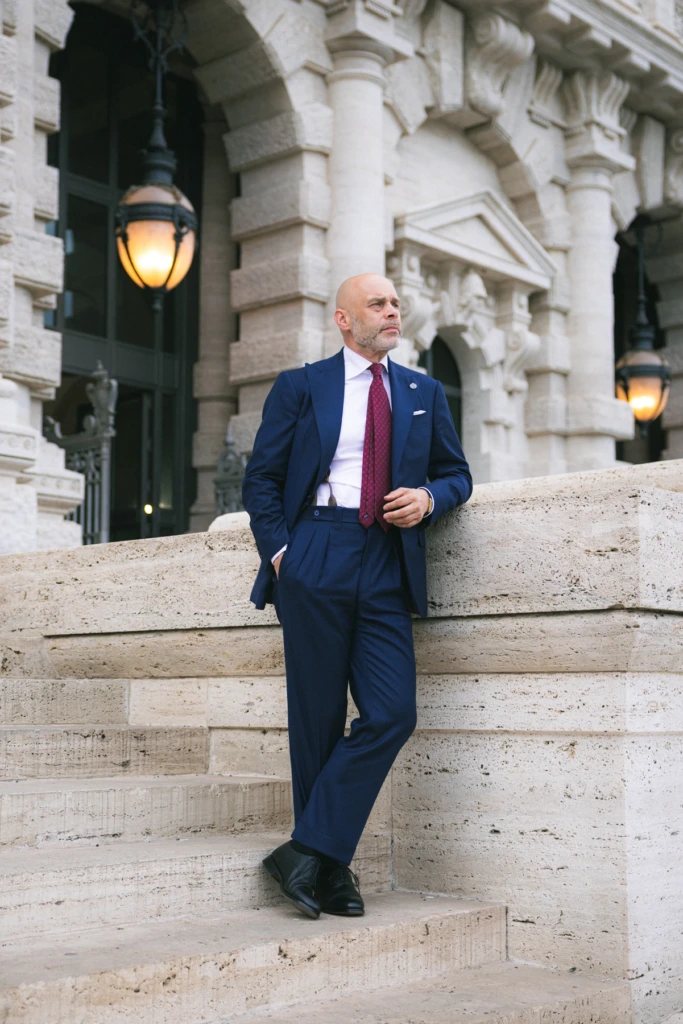

Today, “Super S” indicates fiber fineness measured in microns, and indeed, the higher the number, the finer the fiber diameter. However, this does not automatically mean a higher quality fabric, as it is possible to produce 160s or 180s wool from poor raw material—it simply will not be very durable. Fine fibers must be strong so that despite their lightness and silky feel, they remain resilient. For this reason, we strongly advise against relying solely on the Super S number when selecting your ideal custom made suit.
What Is Wool Twist?
Wool twist and the “Super S” designation are two different things. Twist itself is most often indicated by terms such as 2-ply or 4-ply, which mean that a single yarn was twisted from two or four wool fibers, respectively. In that case, the fabric will be thicker, but it can also have an open weave—it will not stretch out easily and will remain springy, which provides crease resistance.
It is likely this crease resistance and durability of high-twist wool that leads people to consider it a higher quality fabric, but fiber fineness (the Super S number) has little to do with it. A 4-ply wool can be a 120s or a 160s, but that does not mean one is inherently better than the other. They are simply different fabrics.
What Matters Besides the Super S Number?
Wool is defined by many parameters. Beyond the Super S number, fabric weight, weave, and finishing are also important—giving us options like fresco/tropical wool, twill, or flannel. Although these materials are entirely different from one another, one cannot be said to be better than another. If you do not want to get bogged down in technical details when choosing your suit for work, rely on the guidance of professional advisors.
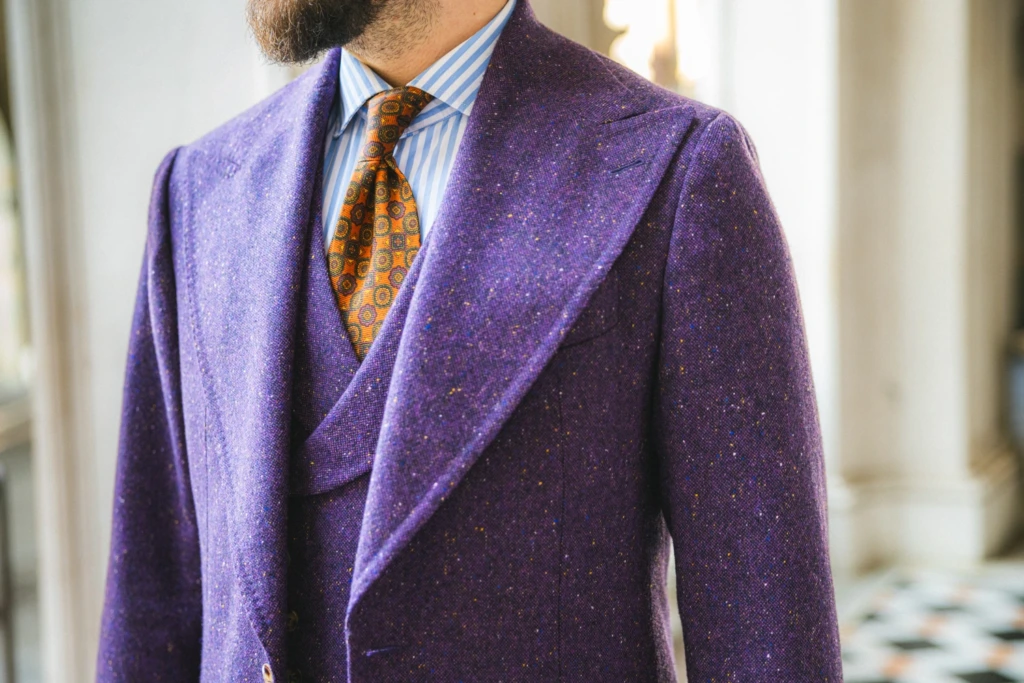
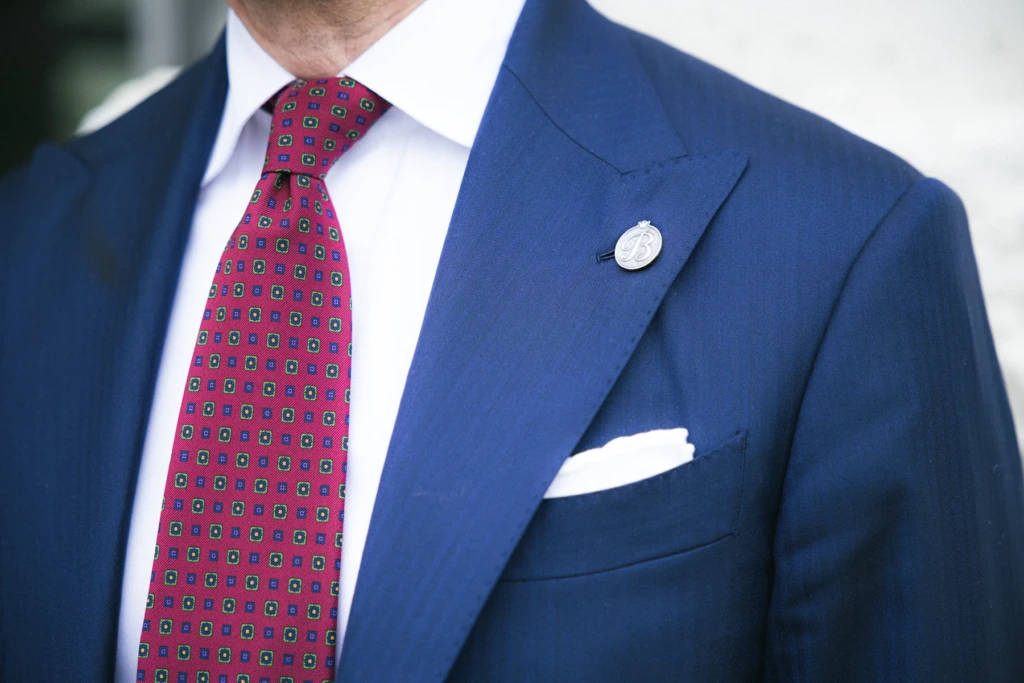
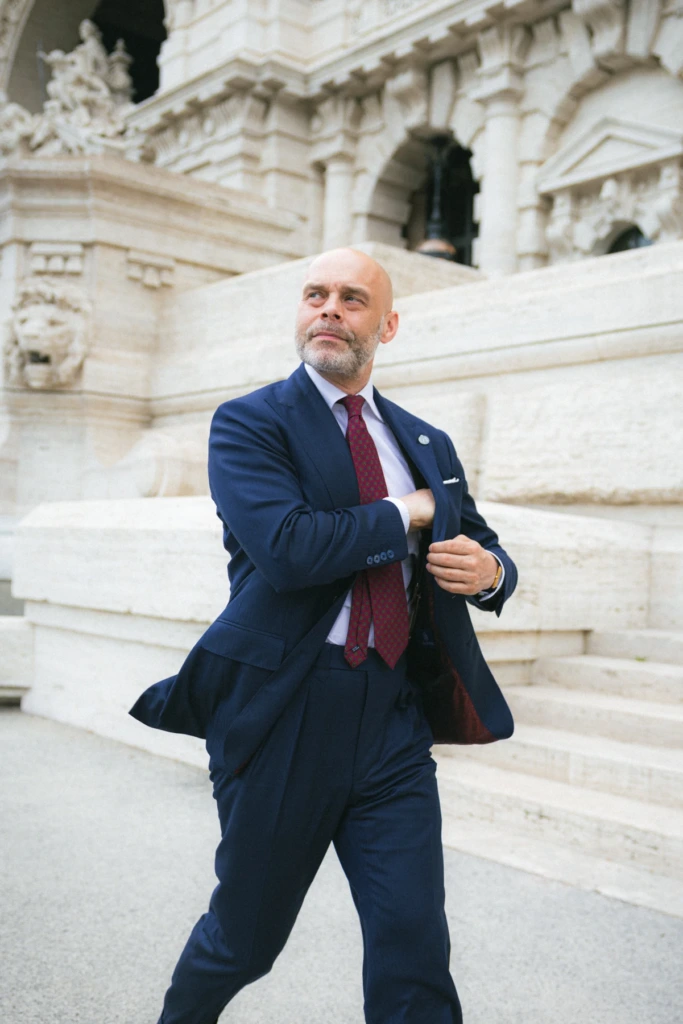
Navy Herringbone Suit in 200s Wool
In the photos, we present a suit tailored from an exceptional material. The wool and silk blend from the Italian brand Loro Piana’s Noblesse collection is perhaps the finest fabric that remains suitable for a suit for work intended for regular wear. A high Super S number provides a subtle natural sheen desirable for evening or formal garments, while a small addition of silk makes the hand-feel softer.
The subtle herringbone weave ensures this is not just another plain navy suit for work. The pattern is visible up close, serving as an understated detail. From a distance, the suit does not reveal all its features, making it most impressive upon closer inspection.

What Is Full Canvas?
With high-grade fabrics, it is not worth compromising on construction. For this reason, this navy suit for work was built using full canvas construction—meaning that inside the jacket, between the lining and the shell fabric, there is only floating canvas rather than a fused interlining. As a result, the jacket molds over time to the shape of the wearer’s chest, and after dry cleaning or exposure to rain, there is no risk of bubbling common in lower-tier fused jackets.
The canvas is secured only at the pockets and buttonholes, floating freely inside the jacket—hence the term “floating canvas.” Many tailoring enthusiasts also maintain that canvas jackets breathe better because canvas is a natural material. While true, it is worth remembering that it remains an additional layer with its own weight.

In our workshops, we also utilize half-canvas construction, where canvas is kept in the chest and lapel area while the lower section is fused. This allows the upper chest to drape naturally while keeping the jacket lighter and visually smooth. This approach is frequently used in unlined jackets, where weight reduction is a priority.
What Accessories to Choose for a Navy Suit for Work?
A navy suit allows for almost any accessory combination, but a corporate dress code keeps choices more restrained. We selected a white shirt, which allows for a bolder tie color. This requires balancing through the pocket square and shoes to maintain a clean appearance.
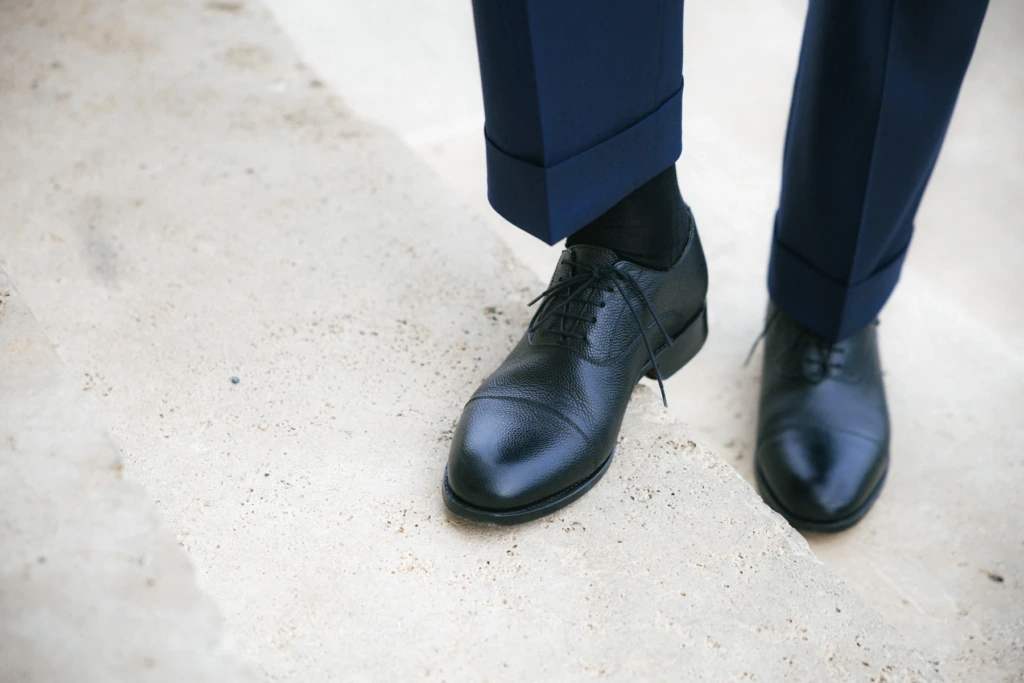
Black pebble-grain oxfords offer a subtle variation on formal rules. While the oxford silhouette remains formal, pebble-grain leather steps down the formality level slightly. The shoes were crafted at our showroom via an MTO system, allowing selection of the precise size, preferred style, and leather choice for a custom made finish.
Pinstripe Business Suits
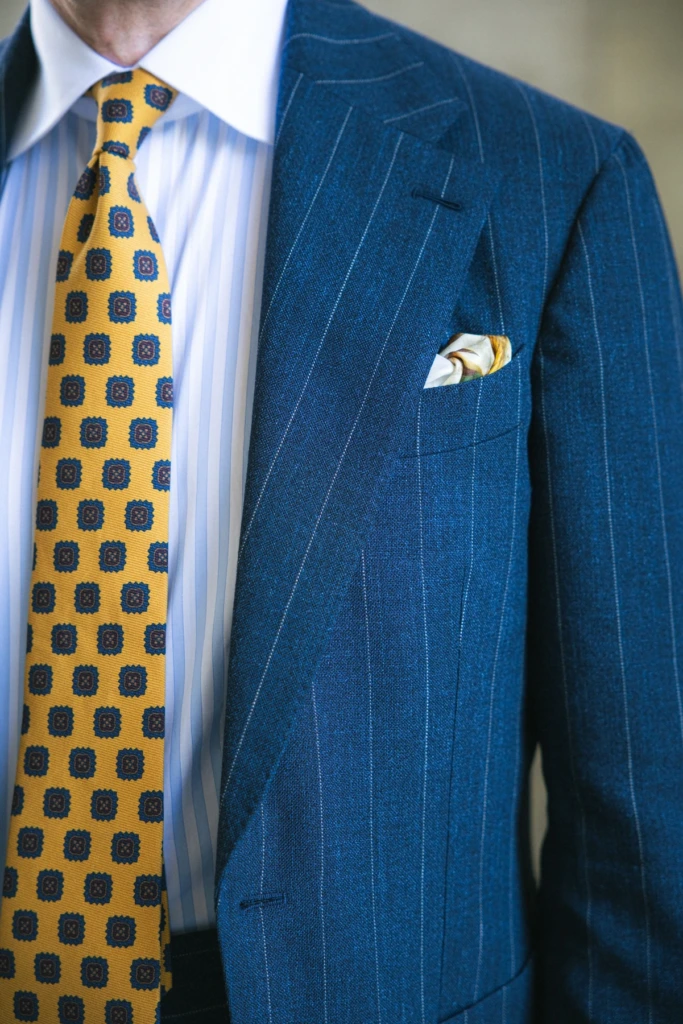
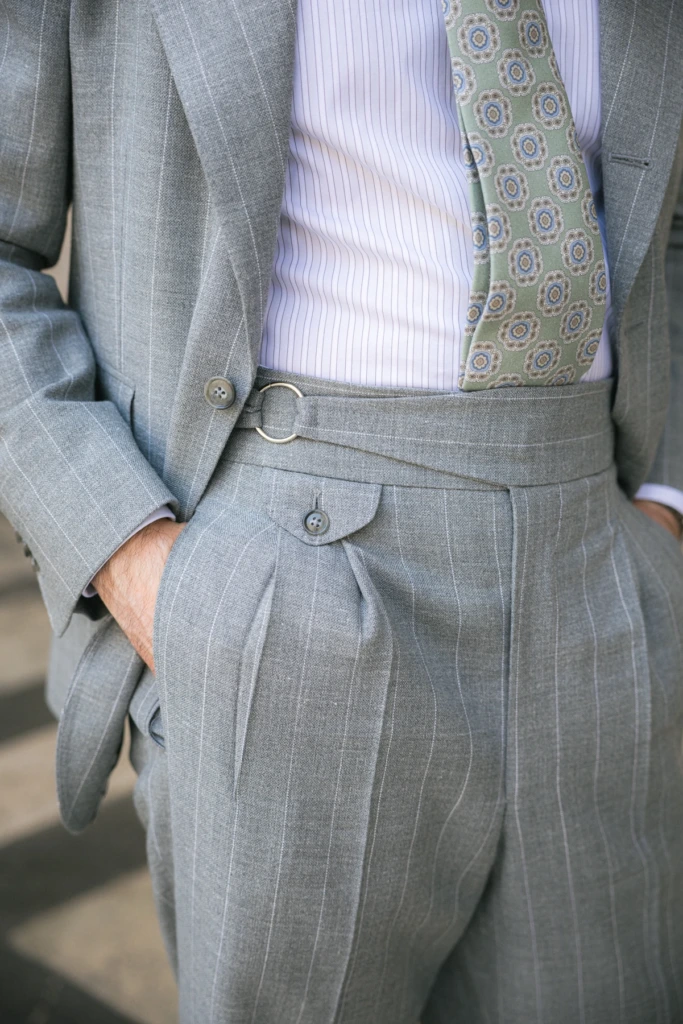
An alternative to a plain suit for work is a pinstripe suit. In one of our recent articles, we presented two suits tailored from Loro Piana’s summer fabric collection, along with Winchester shirts featuring a body of a different color than the collar and cuffs. Read our complete guide.


Where to Order a Custom Made Suit?
We recognize that the number of technical parameters can feel overwhelming when selecting a fabric on your own. At our showrooms, our experienced advisors assess the occasion and intended usage of your suit for work to recommend the most practical solutions. We invite you to contact our showrooms!