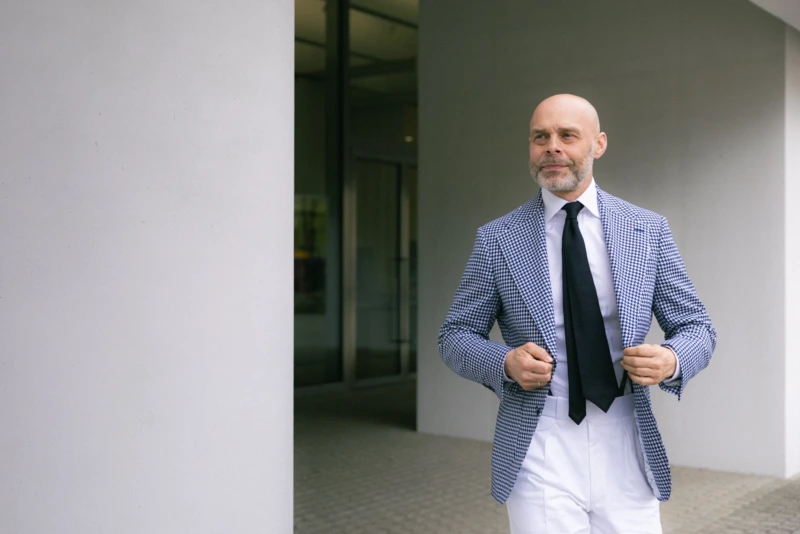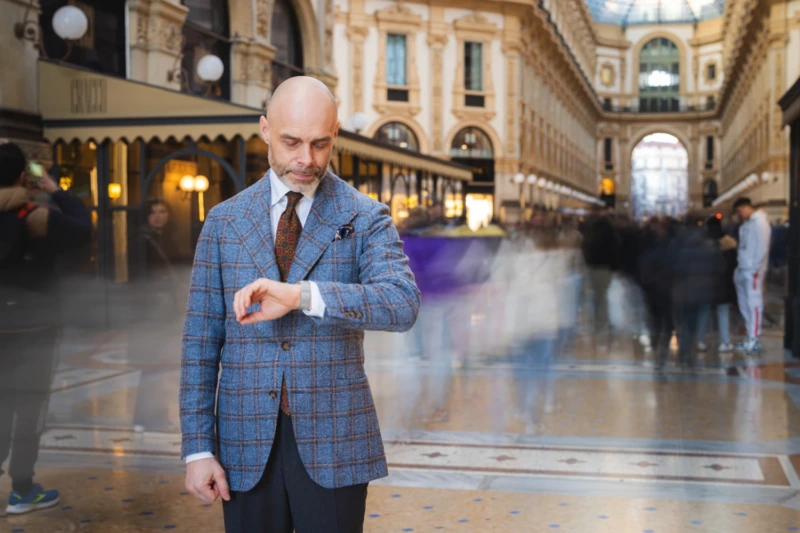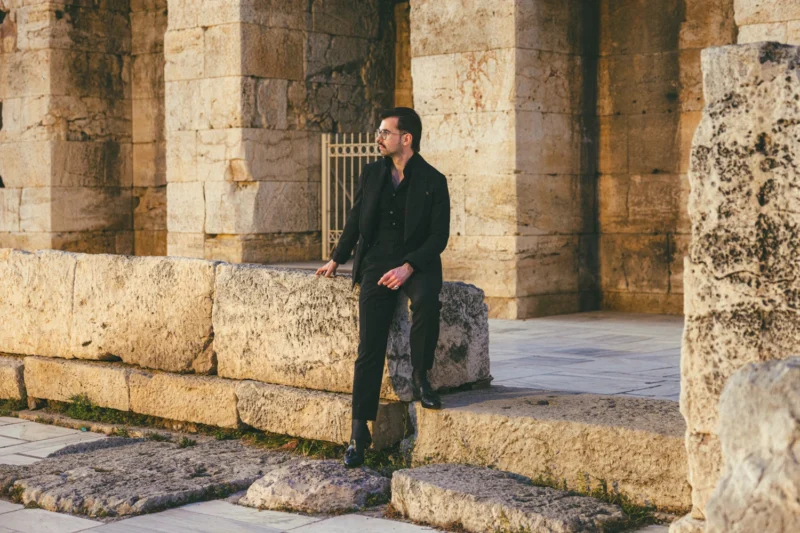
In our articles, we dedicate a lot of space to elegant attire that performs well in the summer. This is a much more complex topic than wearing a suit during any other time of the year, where temperatures rarely exceed 20°C, and we feel perfectly comfortable in long trousers, a shirt, and a jacket. Over the past week, I tested whether it is possible to endure a suit and shirt during the Pitti Uomo trade fair in Florence – here are my observations.
The Most Important Factor: The Fit
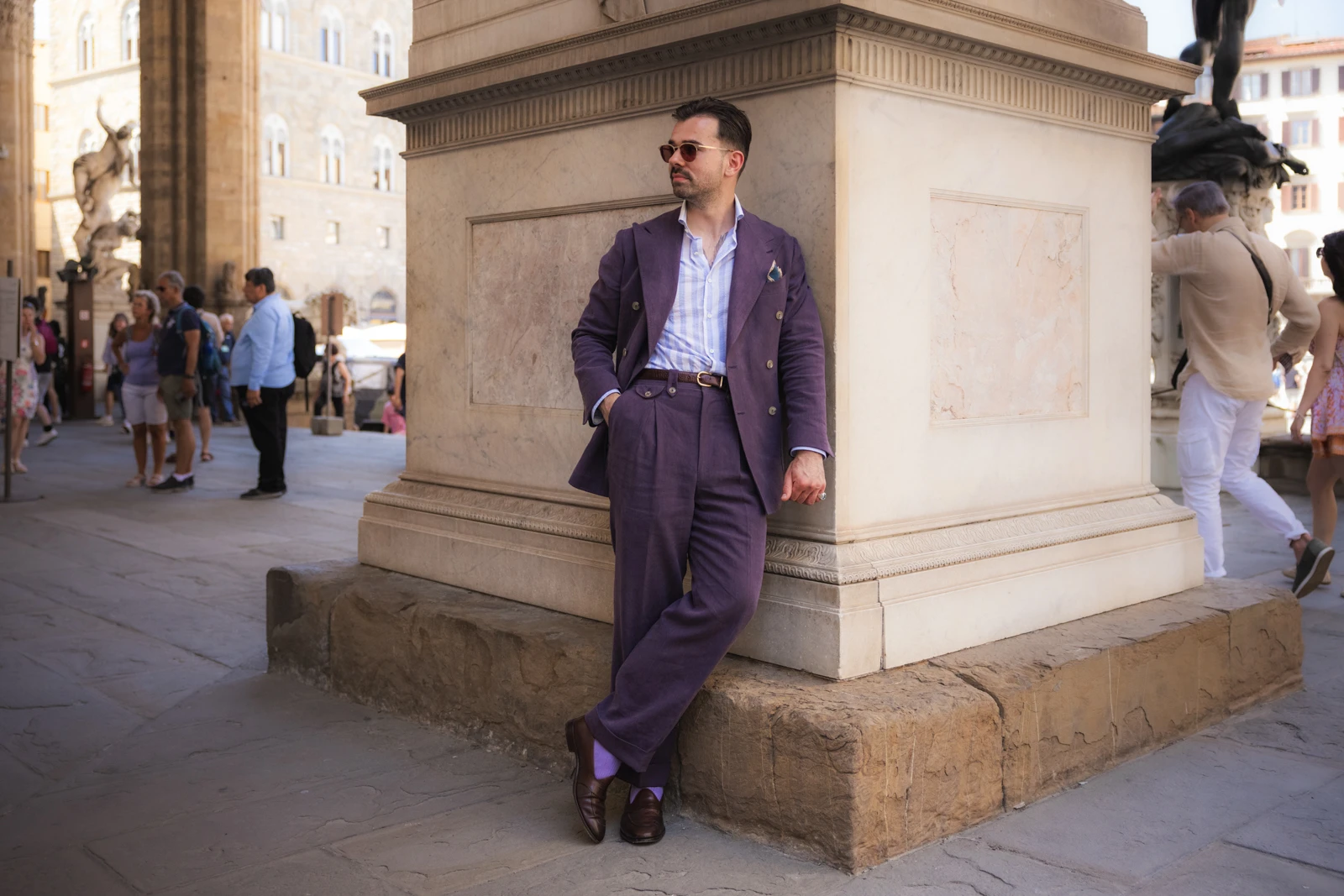
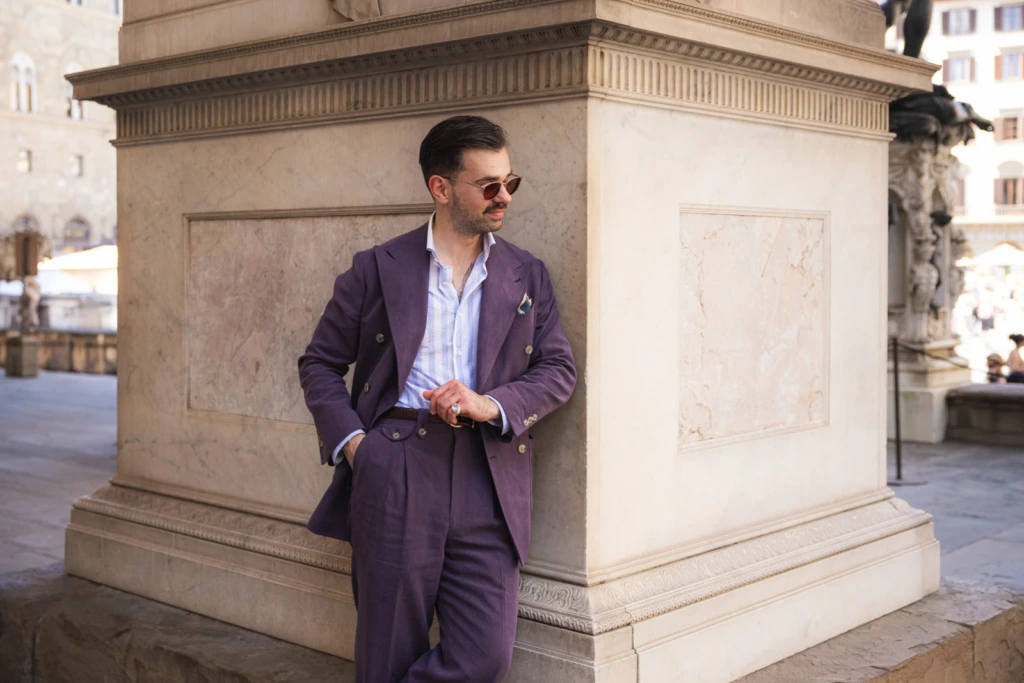
If we want to ensure our comfort, we must opt for looser garments. This allows sweat to evaporate and air to circulate. In this way, we can be sure that after our trousers or sleeves heat up, every breeze will be refreshing. In the case of clothes that sit close to the body, our skin is unfortunately constantly heated by the material warmed by the sun, leaving no room for the layers to breathe.
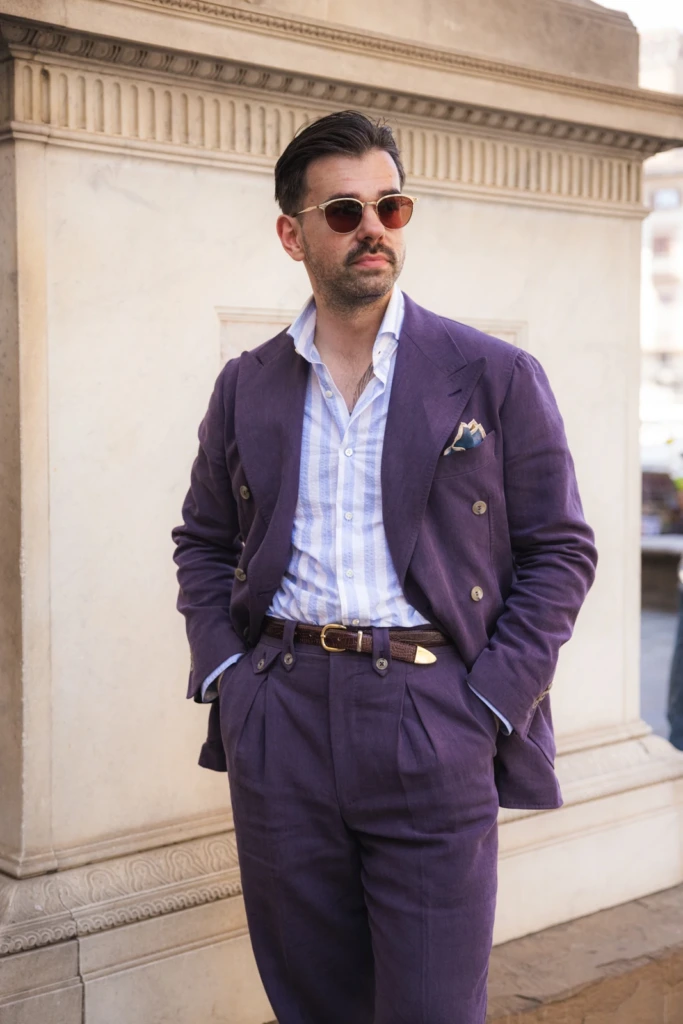
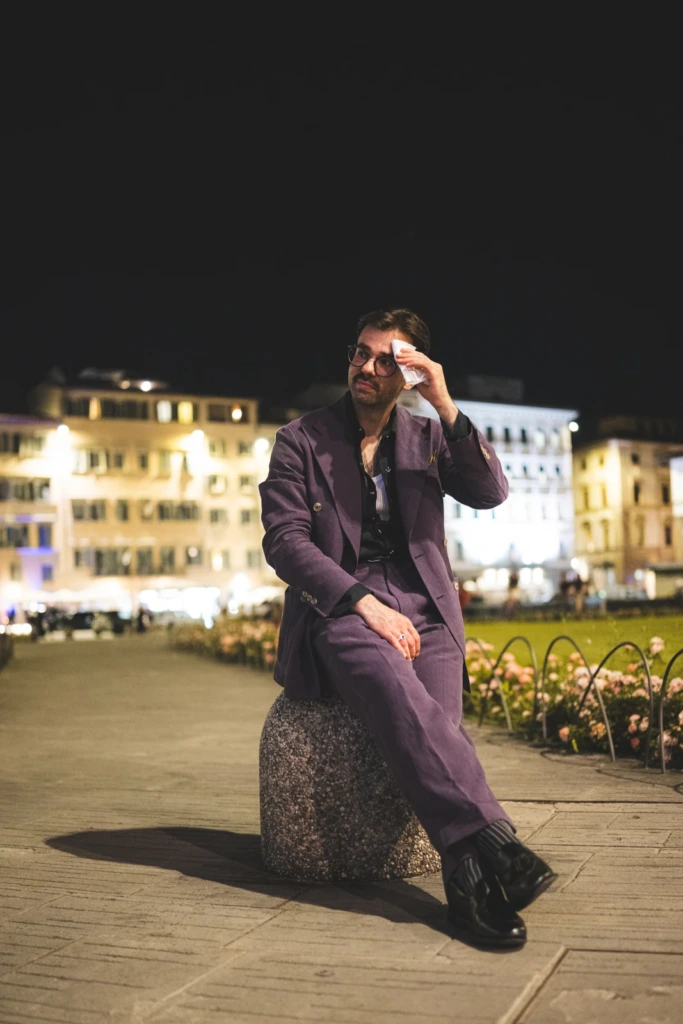
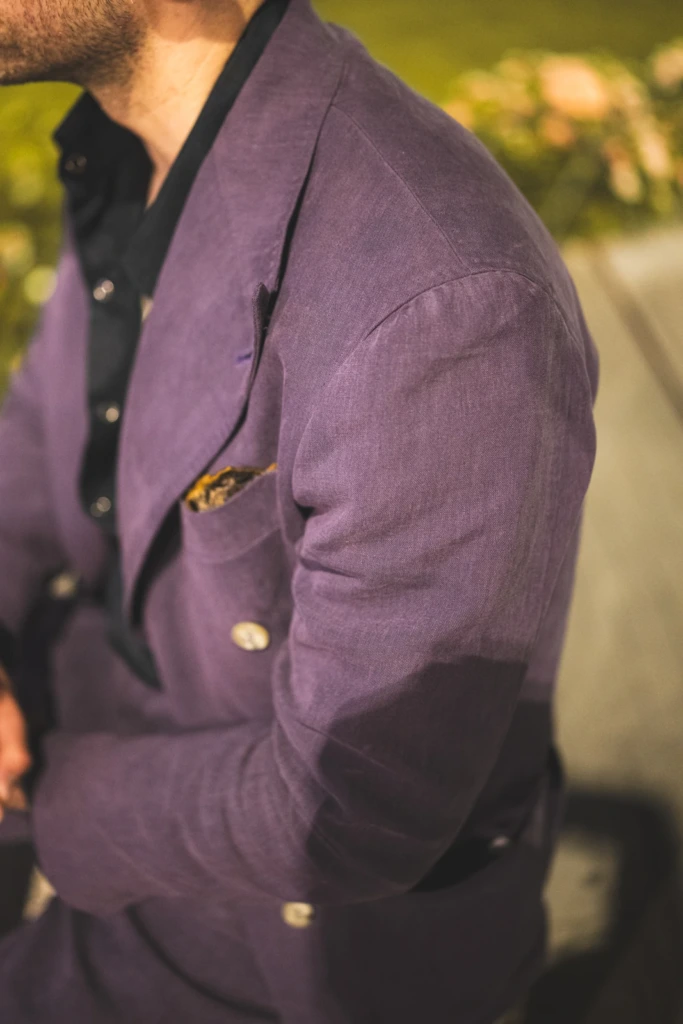
In the photos, you can see a custom linen suit tailored in our atelier from a fabric weighing 410g per linear meter. It is 100% linen from Solbiati, a brand considered in Italy to be true masters and artists of linen spinning. In Italy, only one mill is able to achieve this specific finish, and it is the hallmark of the Art du Lin collection, of which we have recently become huge fans in our workroom.
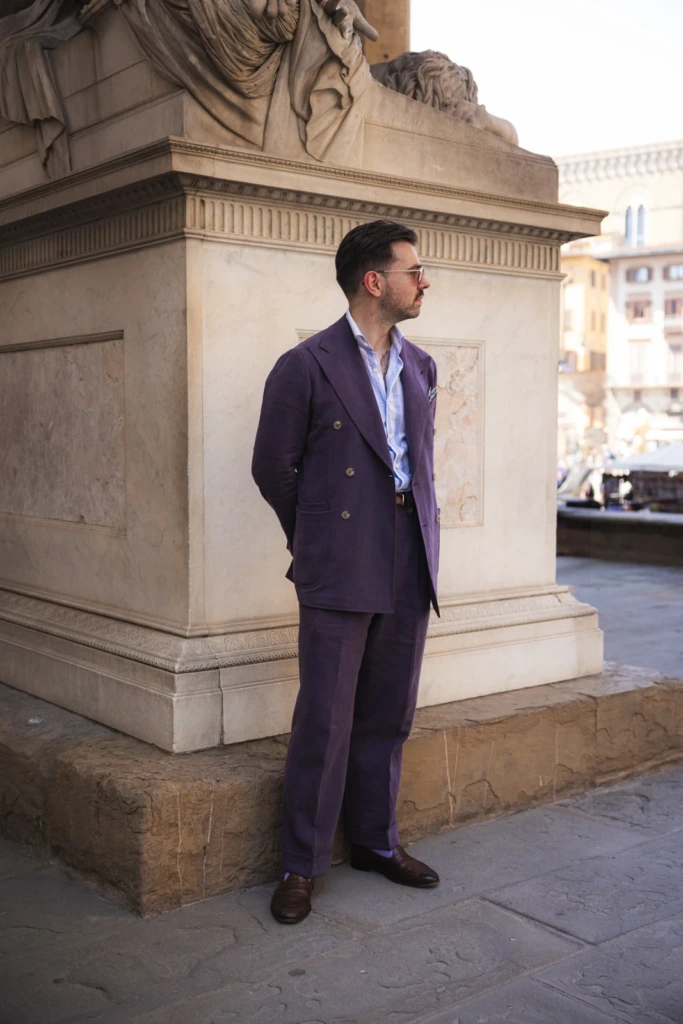

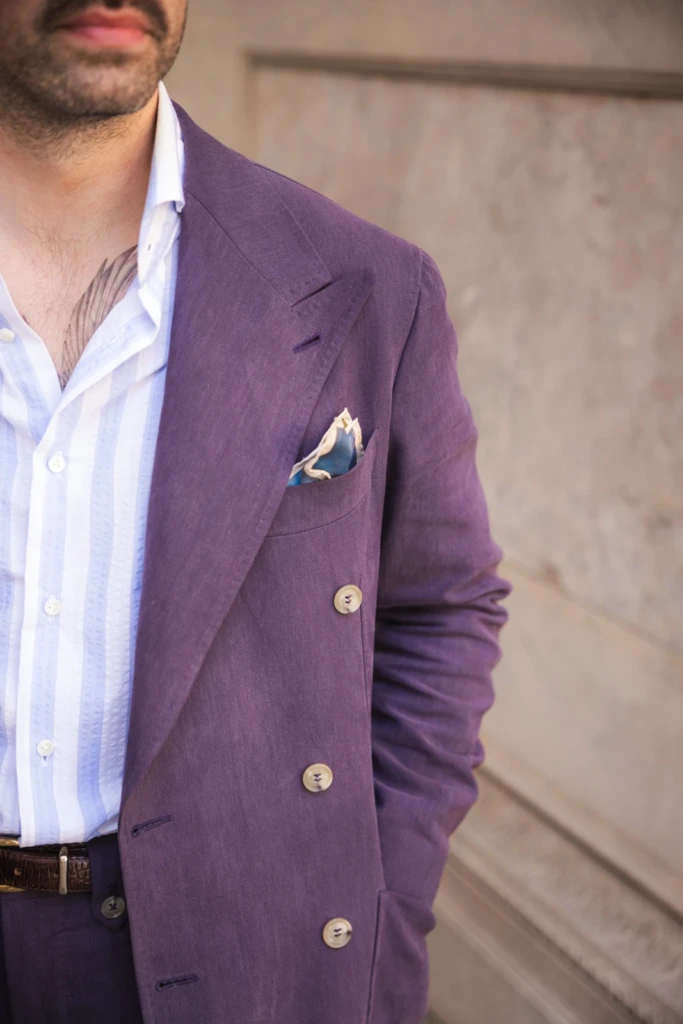
It is worth noting that this suit is heavy. The material is 100 grams per meter heavier than the tropical wool we often recommend (such as the TONIK collection from Dormeuil), which translates to a 300-400 gram difference across the entire suit. Despite this, it is perfectly bearable thanks to the wider cut. I won’t pretend that being in a full suit in 35-degree heat is “comfortable,” but if you must wear such an outfit in summer, let its cut be classic, timeless, and airy.
The Fabric of Choice: The Linen Suit for Summer
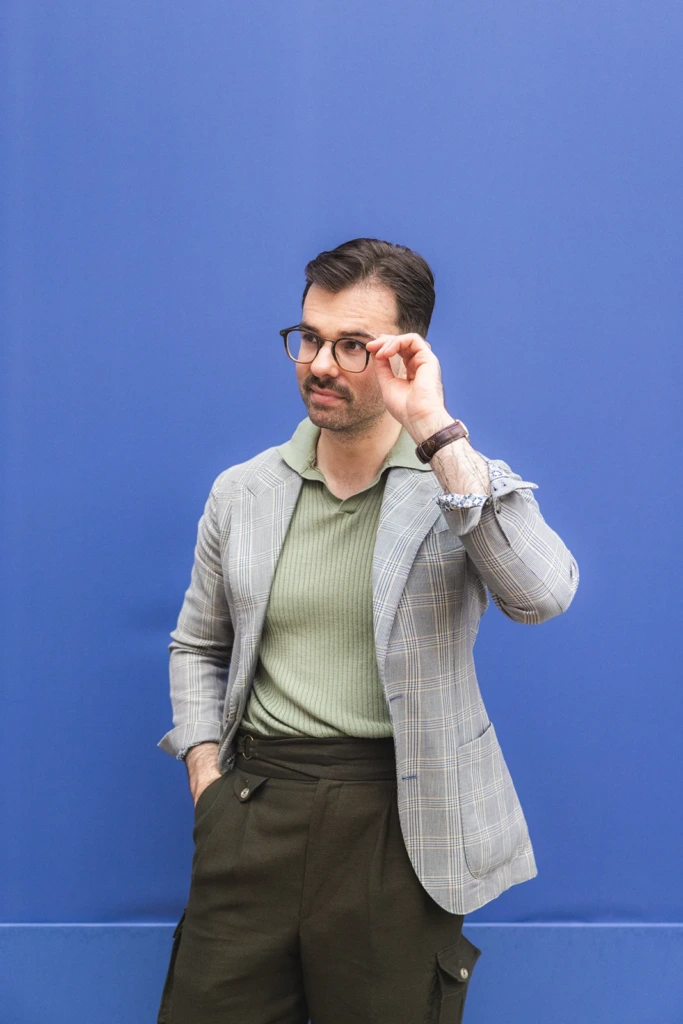
For comparison, on the first day of the fair, I also wore a jacket and trousers made from Dormeuil’s Hamptons collection – a blend of wool and linen in a nearly 50/50 ratio. While the trousers performed excellently due to their looser cut, the jacket was not as comfortable because of its fit. The body was fine, but unfortunately, the narrow sleeves (the jacket was tailored in 2022, following the trends of that time) significantly restricted air circulation.


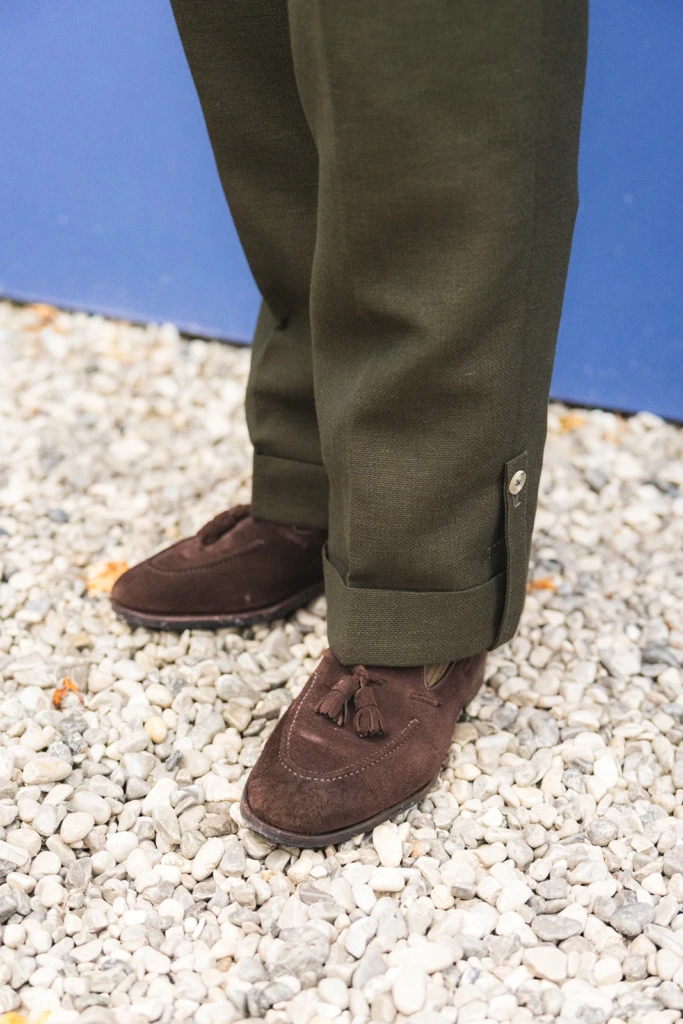
Linen, thanks to its ability to absorb water, benefits greatly from increased grammage. When we talk about the hygroscopicity of this material, we mean its ability to absorb moisture relative to its weight. This means that heavy linencan absorb more moisture than thin linen without feeling damp to the touch. Not at all. If a wet fabric does not touch your body, it significantly improves your thermal comfort.
Another material worth mentioning is seersucker (known in Poland as kora). This is my discovery of the year. Although I have dealt with these fabrics for most of my professional life, it was only this season that I found a pattern in the Albini collection that I fell in love with and decided to test. The wide blue stripes coordinate very well with my wardrobe, and I’m glad I decided to step outside my standard set of white and light blue shirts.
Seersucker is a non-iron material. I had always heard that its uneven texture is theoretically a guarantee of summer comfort because the perforations prevent the fabric from sticking directly to the skin. I can now confirm with a clear conscience that a seersucker shirt does its job perfectly – it was the shirt in which I felt more comfortable than in a standard linen one.

As an alternative to seersucker, I considered linen and cotton jersey. Linen feels stiff, and not everyone likes that sensation against the skin. Jersey, on the other hand, is more elegant and elastic, though to truly benefit from its breathability, you should opt for a wider cut; otherwise, you only benefit from the stretch.
Does an Undershirt Help with Thermal Regulation?
One evening, I wore a perforated undershirt under my linen shirt. Many clients prefer this solution as it allows sweat to be absorbed by the layer closest to the body, leaving the shirt relatively dry. This solution did not work for me. I felt warmer, and once the undershirt became damp, that sensation stayed with me all evening. In extreme heat, it is definitely better to opt for a loose-fitting shirt to allow air to flow and skip the base layer, which effectively just adds extra insulation.

The Perfect Summer Wedding Suit
Moving to the most important question of the season: what summer wedding suit to choose to avoid overheating? My main advice is to ensure the suit is looser than what you might be used to. If you already prefer wider clothing, you’re set. However, if you prefer a slim fit, it is worth going 1-2 cm looser for the summer to allow air to flow. This will significantly increase your comfort, especially considering that many Grooms do not want to remove their jackets during the ceremony while being the center of attention all day. That can be quite a challenge!
You might consider tropical wool, which we have showcased many times. You can opt for a more formal version, as seen in this session: Navy Blue Suit with a Waistcoat for a Wedding, or choose solutions more suitable for boho and rustic vibes, like our Green Wedding Suit. In our showrooms, you can see the fabrics and current projects in person to help make your decision. Our team will be happy to tell you more about the selected fabrics or show you several suits currently awaiting fittings in our ateliers.
We invite you to our showrooms in Warsaw and Poznań!